Some of the places we saw in Tasmania were only in passing. Even if we did spend a night in some of them, it was mostly on our way to another location. Of course there is always time to do a little exploring even if they were quick one-night stopovers.
Launceston
One night in Tasmania’s second city, Launceston was never going to be enough but we did visit the Cataract Gorge. Amazingly this place sits almost in the middle of the state’s second most populace city.
Such stunning ‘wilderness’ right near the city centre.
Views of the Cataract Gorge and its suspension bridge
The gorge walk starts at the road bridge, while the river is navigable all this way south to the road bridge. Thanks to its position on the Tamar River – the country’s longest navigable tidal estuary – it is possible to sail in and out of Launceston to/from the Bass Strait that separates Tasmania from the mainland. About 50km as the crow flies.
Old King’s bridge toll house and cottage. Also looking north from under the new road bridge
The city has some great places to eat. We were lucky enough to get a table at the Black Cow Bistro which was an excellent steak-house serving prime free-range beef. We also had a truly excellent Tasmanian red wine there, which I have not been able to find since… If you are interested it was a Malbec called Obsessionist.
Way out West…
We also spent a night at Strahan on the western side of Tasmania. It sits in the McQuarrie Harbour in an area that is remote even by Tasmania’s standards. This is the end of the West Coast Wilderness Railway. The gateway to the sea. Click on the link for a post about the railway and Queenstown.
Strahan’s old Post Office & Customs House. Plus Strahan station, end of the West Coast Wilderness Railway line.
It’s a short drive from Strahan to the beach lookout. A good place to see the sunset on the west coast.
Sunset on the west coast of Tasmania – with a little car surfing
Another place we only really passed through but still quite interesting.
As always please feel free to share these posts. Also hit the ‘Like’ button and subscribe for email and/or Twitter (“X”?) updates.
You may already be aware that the FIFA Women’s World Cup has been full swing in Australia (and New Zealand). That’s Football in case you didn’t know. The world’s most popular team sport by a million miles (or kilometres if you prefer); most popular sport of any kind actually. And it’s not even close…
But this is the women’s game. Not the same one that Pele, Moore, Maradona, Xavi, Zidane and Messi have graced us with. No; this world cup has stars such as…. Hmm… Let me think… Nah! Can’t name a single one. That doesn’t mean that some may be fairly famous to those who follow the women’s game. No disrespect. But seriously hardly anyone outside of the women’s football sphere knows any of them.
Perhaps you can already tell that I am not at all impressed with women’s football. That would be correct. I do not even follow the men’s game any more (for various reasons) so there is no way I was ever going to be jumping onto the fake bandwagon they created for this “world cup”.
My son Daniel loves the game – as I did when I was his age (didn’t we all?) – and for him this is a win-win situation. If any of the two teams in the final win the tournament he will be fairly happy. It will be played tonight between Spain and England.
Too much hype…
The Aussie media were making the semi final game against England seem like the age old Ashes rivalry in the cricket. I can you that it is nothing like that. There is no big rivalry in women’s football. It’s just a marketing/sales pitch. Anyway the “Matildas” (as the Aussie team are nicknamed) lost and went on to lose the 3rd place play-off game against Sweden. None of that stopped the usual politicians trying to make political capital out of it.
It may well all be over by the time most of you read this post. Thankfully. It already is for me. I have already had to concentrate on the really big game this weekend. My son’s team’s final game of the season. Which as it turned out was a very close 1-0 defeat. Great fun to watch. Trust me it was far more entertaining than anything I have seen in this “world cup”. Yes. A game played by boys aged 9 and 10 beats anything I have seen in this world cup tournament.
Meanwhile… Shine on you Aussie Diamonds…
While all the spotlight has been on the women playing football, Australia actually won a world cup in a different sport. A women’s sport actually (cos men do not play it). It happened just 2 weeks ago and they won it for the 12th time in their history. That was the Australian “Diamonds” Netball team who just won the Netball World Cup. It’s a sport they take very seriously in Australia and I can tell you that whenever we take Dani for his football games there are always plenty of netball games taking place near by for all ages.
Well done to you “Diamonds”! It’s a real shame that the shine has been taken off your tremendous victory by the football.
And finally…
One good thing may come out of this “world cup”. And it’s not that more girls will take up the game either. No. It’s that, due to the relative success of the tournament in terms of ticket sales etc., Australia (and New Zealand) may just land the real world cup when they next bid for it. Now that might be of some interest to me…
Queenstown is a town in the West Coast region of the island of Tasmania, Australia. It is in a valley on the western slopes of Mount Owen on the West Coast Range. Queenstown has a population of less than 2,000.
Queenstown’s history is basically tied to the mining industry. This mountainous area was first explored in 1862. It was long after that when alluvial gold was discovered at Mount Lyell, prompting the formation of the Mount Lyell Gold Mining Company in 1881. In 1892, the mine began searching for copper. The final name of the Mount Lyell company was the Mount Lyell Mining and Railway Company.
Approachin Queenstown form the east. Horsetail Falls and a reminder of old mines…
While there is still mining in the area the prosperity of the town has declined from its peak but there was another brief reprieve in activities when several hydro dam schemes were built nearby in the 1980s.
Overlooking Queenstown and view up Orr StreetQueenstown from the approach road above plus closeups in the town
West Coast Wilderness Railway
History:
The west of Tasmania and especially the Queenstown area was mineral rich. First gold was discovered but later it was found to contain rich deposits of copper. Until 1932 there were no roads linking Queenstown to Hobart (or anywhere else really). Building the railway was the only way to get copper from the mine at Queenstown to the markets. In fact to the sea at the port of Strahan on the Macquarie harbour on the west coast. Until 1932, when a Hobart road link was completed, it was the only access through to Queenstown.
Some notable Queenstown buildings
When a guy called Anthony Edwin Bowes Kelly discovered what was thought to be the richest copper mine in the world at the Mount Lyell Mine, he realised he needed a route to transport his riches to the growing market places. Bowes Kelly lived by moto; We find a way, or make it. Well: He made it. The railway was built in just a few years despite having to cross dense rainforest and incredibly steep climbs and descents. The line operated from 1892 but was officially opened in 1897.
Queenstown station
The steep inclines were overcome by building a rack and pinion railway – using the recent Swiss invention by a Dr. Roman Abt. He made the design based on the cogs of a clock and involved a third central rail of solid bars with vertical teeth that engaged with small cogwheels on the underside of the locomotive engine. The system enabled trains to haul loads up steep hillsides, and (just as importantly) created a braking effect on the downhill side. The steepest gradient on the rack section was 1 in 12 (8.33%).
Up the track. Rack and pinion design enabled the steep climbs
It is a real testament to how well it was built that all these years later it still functions despite the ever encroaching rainforest and unbelievably steep drops right at trackside. After so many years of weathering by rain and landslides. It’s another example of “they just don’t make them like that any more”.
A stop along the route through the dense rainforestAnother station. The oddly named Dubbil BarrilThe Empire Hotel. Another example of “they don’t build them like that any more”The Paragon Theatre, Queenstown complete with murals
As always, if you enjoyed this post hit the like button and feel free to pass it on to friends and anyone you think may like it. Also follow us on Twitter (X?) and/or sign up for emails of all posts. Till the next..
The mighty King RiverA walk around part of the rainforest near Dubbil Barril station
If you follow cricket there is a chance that you know what the term “Beer Wenches” means. If you are familiar with Australian cricket fans then you almost certainly know what it is all about. I heard something about this on the radio the other day and was fascinated. So here’s what I found…
As recently as 2003, Australian cricket fans could hire young girls – usually dressed in not much more than a bikini – to serve them beer during the big games. Only 20 years ago. Incredible eh? Yes, this fits in nicely with the stereotypical view of the Aussie male. But so what? Read on…
Of course this would have been in the height of the summer so the clothing would actually be appropriate. Many of the fans (both male and female) would themselves be wearing very little. But the fact that this whole thing seems almost made up – even to me, the virtually unshockable old dad – tells its own story. Times have really changed. But far more recently than you might think. Only in Australia eh…
Who were the Beer Wenches?
Back in the 1970s drinking at cricket matches got out of hand and authorities tried to curb the amount of booze being consumed in the stadiums. First (in the 1980s) they limited how much booze you could take in to the stadiums then (by the 90s) they banned it so you had to buy beers from the site bars. But even then it seemed fans were drinking too much and getting too raucous.
Amazingly people did not want to wait at the busy bars to get their drinks. So in the first years of this century some decided to hire girls – the ‘beer wenches’ – to fetch their drinks all day.
Companies quickly sprang up providing suitable ‘beer wenches’ to fill the increasing demand. Who doesn’t like a bit of free-market capitalism eh? The long-since-gone beerwench.com website promoted their company offering ‘only of the bubbliest of girls which fit the persona of a beer wench’. They also insisted that sexual harassment would not be tolerated.
‘Our clients tend to be sportsmen driven by his passion to watch their favourite team equalled by his desire to be served by the loveliest of ladies, and of course drinking the finest of cold beers,’ the website said.
That’s not just classic Aussie cheek. That’s typical bloke banter – anywhere on the planet. Another beer wench provider – Sex Bomb Promotions – claimed that all of their girls had been properly trained in the responsible service of alcohol. No substitute for good training I say.
Usually the ‘beer wenches’ were back-packers. The sort of student aged, transient work force that used to do all kinds of menial jobs in Australia; and still does. Many beer wenches were earning over $60 per hour for a 4 hour shift. Not bad money at all for what is basically unskilled bar work. I guess they also got to watch some live cricket in between waiting at the bars. Probably even sneaking in a few free (or paid for) drinks too. So just who was being exploited in this scenario?
What a great idea I say. But of course it wasn’t long before the usual suspects began to complain, for various reasons, and by January 2004 the beer wenches were gone. The killjoys had won (again LOL). A very short lived, but interesting period in Aussie cricket.
Yeah. I hear the cries of “sexism” and “male chauvinism” from the feminists; the do-gooders; the haven’t-got-a-cluers (yeah I made that one up). But I just think some people need to lighten up. Let’s try and put it all into perspective…
Roadworks?
In fact it can’t really be much different from the girls you see at the side of the ubiquitous roadworks, holding up the Stop/Go signs for the traffic. All while their male colleagues do the “manly, hard work” (or not as the case may be!). That must be as boring as hell but they do it; dressed in their mandatory protective work clothing complete with hard hats and high heels visibility vests. I wonder are they earning as much as the beer wenches were 20 years ago? I also wonder how those jobs are advertised?
Wanted: Road workers. Willing to stand for hours on end directing traffic. Must be able to flip a double-sided sign when required. Plenty of spare time in between flipping to mess about on your mobile phone. No need to get your hands dirty on the actual roadworks (the men will do that part). Protective clothing will be provided. No bikinis allowed. Females only need apply.
Yeah that would about do it. Seriously. Is that any less (or more) sexist than advertising for, or working as a ‘beer wench’? I don’t think so particularly, but you see these girls at just about every roadworks. Certainly in Sydney.
Here’s a good question: How many of them would prefer to walk around half naked serving beer in the sunshine instead of hanging around sweating in protective work clothing? I am willing to bet most of them. Even those who don’t like cricket.
Other Similar Work?
You can also compare it to serving beers or coffees in a pub or restaurant. Is that any less degrading? Does it pay as much as being a ‘beer wench’? I have no idea. But at least the ‘beer wenches’ were outdoors (mostly), getting a tan – a pre-requisite for many back-packer labourers. And presumably getting to see a fair amount of the cricket. Maybe an ideal job for female cricket fans? Also by the end of the day when your clients were almost certainly drunk I bet they also got some very generous (drunken) tips.
I’m sure the last time I watched the IPL (Indian Premier League) cricket there were scantily dressed cheerleaders on the pitch. Such (mostly) female groups of paid fans appear in plenty of stadiums around the world for all types of sport.
So I ask again: Would you object to seeing/working as a ‘beer wench’ at the cricket this summer? Is it all just harmless fun? I will let you decide. Please tell me with some comments.
I just see the funny side of all of it. All the while ruing the fact that I missed out on a good day at the cricket back in 2003. But then again I am from a generation where none of that stuff ever really mattered. Everyone just seemed to get on with things without needing others to interfere on their behalf. Those days I thought were long gone. But it seems they only left us less than 20 years ago, back in 2004. Now that, I really do find amazing…
Remember to hit the like button and leave a comment. Also, please feel free to share this blog post with anyone you think may enjoy it. You can also follow us on Twitter and sign up for email alerts of future blogs posts.
Wake in Fright is a 1970 Australian film that was formerly called ‘Outback‘. (Personally I think the original name should have stuck.) It was a combined British/Australian effort and two of the main stars are British actors.
A good friend sent me a message asking about the movie. I had heard of it as it was in a list of movies that had been filmed in Broken Hill (which is a place I have blogged about a few times – search this site for those). This film is famous for several reasons so I just thought I had to find it.
A Little Film History…
Some 20 years after being made Wake in Fright had developed a kind of cult status as a great Australian “lost film” because its master copy had gone missing. Other copies were of poor quality and this impacted on TV showings and VHS sales. Then in 2004, the original film and sound elements were rescued and the film was digitally remastered and re-released in 2009. The film was again shown at the Cannes Film Festival in 2009, making it the first movie to be shown in two separate film festivals at Cannes.
It has more recently been made into a two part TV mini-series. Maybe I need to check that out too…
Plot
It is a curious film set in the outback town of Bundanyabba – referred to by the locals as ‘The Yabba’. Basically John Grant (played by English actor Gary Bond) is a a school teacher in the even more remote outback setting of Tiboonda. When he heads off for Sydney for the summer holidays he passes through the town of Bundanyabba (which is actually Broken Hill) where he gets sucked into the debauchery of constant beer drinking, gambling and violence. Grant gets sucked into a game of Two Up (see related post on the game here) and loses all his money.
“Tiboonda” – in the outback
Grant then gets offered the hospitality of some “yabba” locals. Which basically means plying him with free alcohol (mostly beer) and inviting him to crash at their place(s). He also gets given a gun to join some of them on a kangaroo hunt. It is probably these scenes that shocked viewers the most.
The kangaroo hunt scenes were filmed during a real hunt. I am sure you will all know that scene in Crocodile Dundee where Mick Dundee turns the tables on the hunters in favour of the roos. Well, this movie is most definitely not that! After the hunt – and barely able to stand up – the group of drunken men brawl with each other and smash up a remote outback bar. Just another excuse to show some (perhaps stereotypical) violence really…
Grant eventually tries to hitch-hike his way to Sydney but by a curious (yet believable) twist he ends up back in the “The Yabba”. Spoiler Alert: Grant then ends up tying to shoot himself with the rifle he was gifted. But after what must be several weeks in hospital he walks out and goes back to Tiboonda for the start of the new school year. Seemingly content. The End…
Critique
Personally I think Outback was a better title than Wake in Fright but that is hardly a big deal. As you might expect the movie is very dated. But it painted a picture of the outback – or small town Australia – that would not have surprised many over recent decades. It was how most people outside of the country thought Australians behaved. Right up to and including the time when Crocodile Dundee more or less glamourised such a lifestyle.
The acting was fine and the scenery exactly how it should be – it was after-all filmed in and around an outback mining town. The story just never really took off though for me. It was mostly a pointless excuse to show a load of drunken debauchery and violence. As if the film-makers wanted to show the world what the outback male was like. It certainly will have fuelled the stereotypical image of the Aussie male. And that may still be true in some places but certainly not for the majority who live in the big cities.
The kangaroo hunt may be a bit gruesome perhaps for some – even these days. But it’s not like roos are an endangered species and hunting them is (as far as I know) still legal. On any road trip you will see hundreds along the roads that have been hit by (mostly) trucks. Maybe we really have become soft? Yet even at the time the film was made the crew were apparently sickened by the orgy of blood and guts. Also (apparently) during the 2009 screening at Cannes several people walked out during this scene. I must be a hard old bastard as I didn’t think it was that bad.
Martin Scorsese arranged for the movie to be included in the 2009 festival. He was quoted as saying that Wake in Fright was “a deeply – and I mean deeply – unsettling and disturbing movie”. Imagine that. With the movies that Scorsese has made! Personally I do not share Scorsese’s sentiments but that was another reason I wanted to see the movie.
I would not class it as a must-see movie but I do recommend it. If you can find a copy on DVD or online then give it a try.
We have been back in Sydney for a week now and the jetlag has more or less been ironed out of us. It hasn’t been too bad actually. Mostly just needing to go to bed a little earlier than usual which is not a bad thing. It was a very hectic trip over to Europe and obviously far too short. But at least Dani got to see his family; and they him.
Oh I Do Like To Be Beside The Seaside….
We escaped the intense heat of Madrid and took a short trip over to the UK which gave Dani the chance to catch up with is British family including his cousins. While there we made a visit to the British seaside. The UK had already had its own heatwave back in June and by the time we were there it was back to what I suppose you would call normal British summer weather. In other words you could get almost every season in the same day.
Classic Bingo machines in the British seaside Amusement Arcades
These old seaside towns brought back memories for me. This is how we used to spend our summer holidays when I was Dani’s age. Back before flying off for a foreign holiday (to places like Spain ironically) became the thing. This one was on the North Wales coast, but they are all very similar. And there is nothing wrong with them. They retain their charm albeit (in many cases) in various states of decay. Some “resorts” could do with a facelift more than others.
Dani plays Bingo and the highly addictive Two-Penny Falls game.
Those Two-Penny Falls machines are instantly addictive for kids. As much, if not more so, than those bloody video games. But at least it’s a relatively cheap form of “entertainment”. It kept Dani and his cousin Stan amused for a coupe of hours at a cost of about three pounds. Naturally they wanted more money to continue “playing” the machines. That’s the idea eh… But no. Instead we had a few games of Bingo and left.
A week was never going to be enough but off we flew back to Spain for a couple of days before the long flight back to Australia. We arrived home about 11pm and Dani had his first day back at school the following morning with a 6.45am start – for the pre-school activity of football training. LOL. And he made it. Fine and bouncy. The next day he was off for a two night stay at a camp in Bathurst with his school year. Including a couple of touristy stops in the Blue Mountains. Lucky lad. It was a tough first week back in school for him but he managed.
Double Digits
Meanwhile back in Spain Dani’s cousin Susana is now at the landmark age of 10. Yes, double digits from now on. Where did those 10 years go? Wow! Dani and Su were almost inseparable for many of those years of course, doing almost everything together. More like twins than cousins. Happy birthday Susana.
What The FXck is This?
Meanwhile…. If you don’t already know; Twitter, that online (anti) social media giant has changed its logo. Gone is the little blue bird (called Larry apparently); and in comes the big “X”.
The New Twitter Logo (for those into such things)Larry the bird. The old Twitter logo is being phased out.
This is all part of a new rebranding by new owner Elon Musk. I really couldn’t give a toss but the twitter link at the bottom of this blog’s page remains a bird logo. It seems that WordPress – the basis of this blog site – are not as quick on the uptake as some. Not to worry the link still works. Try it.
Apparently co-founder of Twitter was (is) a big Boston Celtics basketball fan and he named the company’s logo Larry, after the Celtics famous ex-player Larry Bird. Get it? Nah, me neither really. Well, OK, I do but… These social media nerds have a lot to learn about real life in my opinion. Still, they are the ones making billions of dollars… Grumpy old dad stuff I know, but cut me some slack eh…
This school holidays we are back in Europe. After a 24 hour journey we arrived in Madrid. And after coming from a fairly cold Sydney winter it is bloody hot!
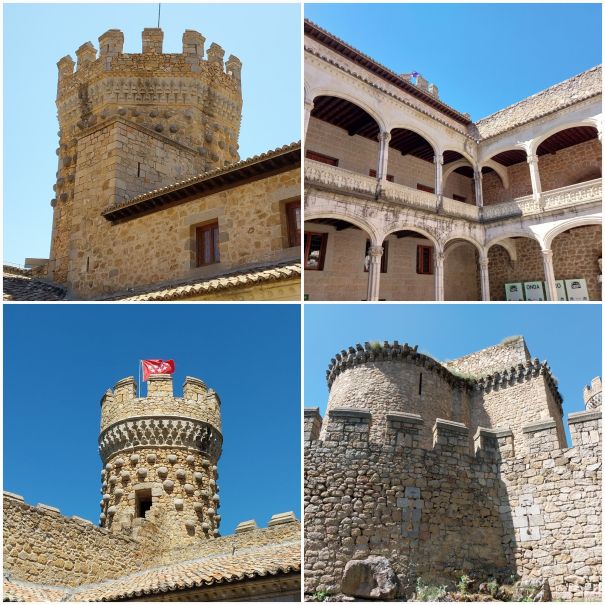
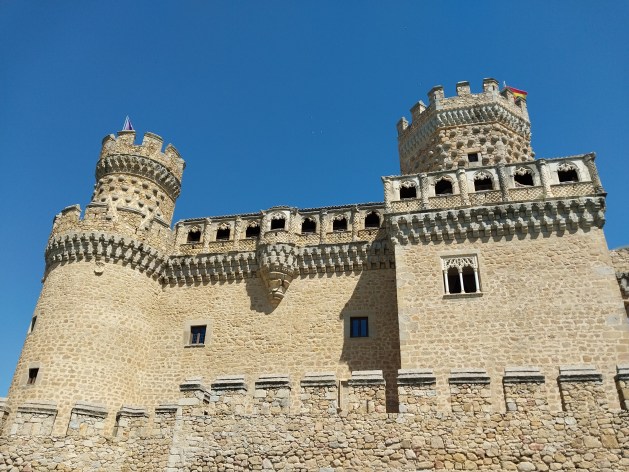
A day later we headed off for a day out so that Dani and his two Spanish cousins (now on their long school holidays) could see a classic old castle. The classic palace-fortress castillo de Manzanares el Real.
The town of Manzanares el Real has about 9,000 inhabitants and lies to the north of Madrid. It is about an hour on public transport (bus) from the centre of Madrid. It is located at the foot of The Pedriza (see photos below), which is part of the Sierra de Guadarrama mountain range. In front of the castle is the embalse de Santillana (the Santillana reservoir).
The impressive castle of Manzanares el RealThe town and mountain backdrop to the castle
The castle is known as the New Castle of Manzanares el Real and is the best conserved castle in the Community of Madrid. Construction started in 1475. The old Castle is actually the ruin of a former fortress. Only two walls remain standing, now integrated into a garden complex. Unsurprisingly the castle has been used in several motion pictures, most notably El Cid.
Views from the streets near the castle
Views from windows and doors
I am sure you will agree that this is an extremely photogenic castle. If you haven’t visited this area and you get the chance I can highly recommend it.
Stadium Tour – Cheeky Bastards!
The following day we took the kids on a tour of the famous Estadio Santiago Bernabéu. Better known outside of Spain as the Bernabéu stadium, home of Real Madrid football club.
The stadium is currently undergoing major works as they race against time to complete the outer shell and retractable roof before the start of the new season. It’s basically one big building site inside. What an absolute rip off for people who have come from all over the world (and they do!) to see the stadium and hopefully get the chance to step on the famous pitch. It was basically all shut off – and you can see why from the photos. A total construction site.
Yet they still charge people for the “tour” – albeit at a slightly discounted rate. I guess that all goes to show how much these super rich football institutions really care about the poor fans eh? Wankers! (in my opinion). That is why I dislike the big football clubs so much these days and do not bother with football at all. But of course they won’t give a damn about what I think of it will they? Ah, who cares? The people flock to it like moths to the light.
The main thing is that the kids seemed to enjoy it and even bought some souvenirs from the “official shop”.
Tour of the Santiago Bernabéu stadium
A couple of days later the kids spent hours in one of those video gaming zones they now seem to put in all of the shopping centres. I think given the choice between a classic old castle, a famous stadium tour and a spot of virtual reality gaming, the kids would choose the latter every time…
Dani and Susana in the addictive gaming zone of one shopping centreAnother view of the castle of Manzanares el Real
The other day my son tried to explain to me why products on the supermarket shelf cost so much and all the various stages of production and costs in between. From the farm, the processing/packaging stage, to the distributors, then on to the shelf in the shops… Of course I know all that ‘supply chain’ stuff but I humoured him. It’s good he is getting an understanding of how all that works and how the price goes up, each step of the way. It’s business and how most of the (so called) free market operates.
Recently I have paid more attention to the supermarket prices and it seems clear to me that all this talk of a “cost of living crisis” is probably just bullshit. Yes, most things have gone up in price. But these are artificial price hikes which they (if you know, you know) can get away with because they are constantly telling us that there is a “cost of living crisis”.
But there shouldn’t be any such thing. There is no reason for prices – especially for local produce – to be as high as they are. And below I present evidence that I believe clearly highlight the “cost of living crisis” scam for what it is.
Exhibit A – One tin of Chickpeas:
Analisa Chickpeas. Other brands are available.
The price of this tin of processed imported chickpeas is $1.90 which comes in at $4.80 per kilo. And BPA Free too – whatever that means?! (I have no idea). These are produced, processed, canned and shipped from Italy.
There is another – even cheaper Woolworths ‘own branded’ – tin available for just $1. That equates to $2.40 per kilo. Those cheaper chickpeas are also from Italy.
For comparison, in the same shop, you can buy a 1 kg packet of dried chick peas for $3.70 – and those are Australian made (grown)! Not only are there cheaper imported alternatives but they are already cooked. So there is no (or little) additional cooking expense. Makes you think eh? All of those growing, processing, transport, handling, distribution costs and labour involved; yet still cheaper. Nuts! (Well, chickpeas in this case).
And yes, I do realise that factories buy fresh produce in bulk for canning (so therefore cheaper than we would pay in a market) but still… Isn’t the cost of transport meant to be very high these days? Fuel prices anyone? Or is all that inflation just for us plebs who have to put fuel in our cars?
Every link in that supply chain will be making a profit. They wouldn’t do it otherwise – or at least not for long. So: Where is this “cost of living crisis” coming from exactly?
Exhibit B – One tin of Italian Tomatoes (peeled even!):
Woolies “own brand” Italian Tomatoes. Peeled no less! That’s nice of them eh?
Who doesn’t love Italian tomatoes eh? But these are a fraction of the cost of fresh tomatoes grown in Australia – according to what the supermarkets dictate. Another example of food being grown in another country, being processed, canned and then shipped to the far side of the planet. Then there is all the distribution by lorry/van and handling at warehouses. Somehow the cost is among the cheapest on the shelves. The price of that tin of tomatoes is $1.10 – which equates to $2.75 per kilo.
Meanwhile, the cost of fresh Australian grown tomatoes varies wildly – sometimes seasonal maybe, other times who knows? It can be anything between $12 to $18 per kilo. (You can check on any supermarket’s website.)
How is that possible? How the hell can (relatively) locally grown, fresh produced tomatoes cost at least 6 times as much? How can it be justified? Nobody will be taking a loss in all this. The canning factory will sell the tins on for profit. The shipping company will charge according to weight and size (as always) and the importers will charge the supermarket who then charges you/us. Everyone is getting a cut. The Italian farmer may be practically giving his tomatoes away in real terms, but must then surely be subsidised (probably with European Union grants – i.e. taxpayer’s money). Otherwise nobody would bother. Would they?
So tell me again please: Where is this “cost of living crisis” coming from really?
And now a personal favourite of mine… Exhibit C – ‘Edge’ Razors, pack of 20:
Best value shave on the market. Bar none!! But other brands are available (of course)
Question: Who is old enough to remember John McEnroe when he was at the height of his tennis skills and also the height of his notoriety? If you remember those days then you will probably have seen McEnroe advertising those Bic razors. He was playing a game and the umpire made a call something like “that was a close shave Mr. McEnroe.” To which McEnroe yells out his reply (something like) “When I need a close shave you dick, I use Bic razors!” – close enough for this blog post… Classic McEnroe behaviour back then.
Anyway, the point is – and surely anyone who has used them will agree – Bic razors are really shit and rip half your face off. Guaranteed the worst shave you will ever have. Well that’s my opinion anyway and I’m sticking to it. But they still seem to be everywhere. Weird eh?
Incredibly these “Edge” razors cost only 22 cents (Australian) per twin blade razor as opposed to those crappy “cheap” Bic things which are 35 cents per twin razor. These “Edge” razors on the other hand, give a really good smooth shave. As good as anything I have used. So forget the expensive Wilkinson Sword and Gillette – which are extortionate by comparison – or even the garbage Bic razors. In the competitive market of shaving these razors are incredible value for money.
However, my point is what is on the reverse of the packet. It says this:
“Blades made in USA Assembled in Mexico Packed in China”
I kid you not! Then of course they need to be shipped to Australia, warehoused and distributed to your local supermarket. What!? Isn’t that crazy? Yet so much cheaper than even other well known “cheap” brands.
OK. Packaging in China may be damn cheap and assembly in Mexico could well be equally as cheap. These places have a plentiful supply of cheap labour right? But making the blades in the USA? Not so sure. Then of course there’s the logistics of that whole operation. Get them made, then shipped to the other side of the world (China) to be packed, then shipped on (again) to Australia. Double shipping costs! How the hell???
How can companies supply such good value when others are using the “cost of living crisis” to massively increase the cost of their goods? It’s a question you should all be asking your friendly local politician.
Top Tip:All you women out there should also be buying these value for money razors. They are not only for men – you know that right?
Summary
There are other examples but you get the point I hope. So..
Is there really a “cost of living crisis” or is it just made up to frighten people and for the news outlets to constantly harp on about? The chick pea and tomato farmers in Italy are no doubt also being told every day that there is a “cost of living crisis”. But do they know that their produce is being sold so cheaply on the far side of the world? What are they paying for similar produce in Italian supermarkets? (Other countries apply equally of course).
Undoubtedly a lot of products have shot up in price since the big “cost of living crisis” announcement. Why wouldn’t they? If the government tells everyone such a “crisis” exists many will jump on that bandwagon. Without fail. And put a huge increase on their prices. It’s a great opportunity to cash in. That’s capitalism I’m afraid…
The point is that many locally produced/grown products should cost almost nothing. These examples prove that. Or there is a lot that they (yes them again!) are not telling us…
So. I ask again: Cost of living crisis? What cost of living crisis?
And yes. The title of this post is a nod to that great Supertramp album “Crisis? What Crisis?”
As always feel free to share these posts, like and subscribe for twitter/email updates.
OK, first of all I wasn’t sure about the title but here goes…
Yesterday was very different for the kids at Dani’s school. Not far away – and just about the time when most kids were arriving for another day’s education – there was as shooting incident. A deadly one as it turned out.
The school got to hear about it quickly. Not sure how but I guess the police must have called every school in the area and told them that it was probably for the best that all children remain indoors during break times. Anyway, that is what happened at Dani’s school.
There may have been an understandable fear that it could be a “school shooter” – the kind of thing we seem to have become accustomed to hearing about in the USA. It turns out that it involved a well known “gangland boss” was shot in the underground car park of his apartment block. It happened at 8.30am right when kids were on their way to the many schools in the immediate area.
From news reports it seems that there were two shooters who escaped the scene in two separate cars – both later found abandoned and burnt out. The police also were quick to point out that the man shot should have been aware something like this would happen. They said: “He’s a major player… he obviously had a big target on his back.” He was a member of a notorious motorcycle (biker) gang involved in “organised crime and the drugs trade”.
Naturally gossip eventually turned to actual news in the school. So it wasn’t long before the kids in Dani’s class knew what had gone on. When I spoke to him after school Dani explained that his school colleagues were affected in different ways. The girls he said were anxious while many of the boys were making jokes about it all. Typical eh? Well, maybe. I like to think some things haven’t changed since I was his age. That is probably how my class would have reacted.
By having to be kept indoors while police sealed off part of the locale I think the kids feel they have been (even in a very small way) part of a big news event. And they have. It was – dare I say it – an exciting and dramatic day for them. As one newspaper headline wrote: “Lunch bag and a body on the school run”. Hey! That may have been a better title for this blog post. Ah whatever.. I am just glad nobody else was hurt.
I thought I should record yesterday’s events so that my son can read about it when he is older. Possibly remind himself. That is if he ever gets around to reading this blog… LOL
All you regular readers out there (all 4 or 5 of you?) will know I have a thing about the old historical cemeteries in Australia. But this one is different. Trust me; this place is very different…
The Isle of the Dead
This place is called The Isle Of The Dead and is, no doubt, self-explanatory. The small island sits about a kilometre off shore from the main part of the convict colony at Port Arthur in the southern tip of Tasmania. The opposite side the isle sits quite close to Point Puer, where the boys prison once stood. There is little left of the boys prison but it was said to have incarcerated boys as young as 9.
For more about the Port Arthur penal colony see our earlier post here.
The mainland penal colony viewed from The Isle of The Dead
As convicts and their guards (and families) came – and passed away – over the years, the authorities needed to find a site for a cemetery. The isle was used as a cemetery for the penal settlement from September 1833 to 1877.
A lone grave at the edge of the Isle of The Dead
The cemetery was divided into two designated sections. Convicts were buried on the lower, southern end of the island. No headstones or markings were placed on convict graves, as they were not allowed. Free people were located on the northern western corner of the island and their graves were generally marked with headstones and tombstones cut by convict stonemasons.
Very few on the convict side of the cemetery have headstones or markers
Contrasting view from the non-convict side of the cemetery
The actual number of people buried on the island is unknown because of the destruction of many official records but there is thought to be some 1,500 graves on the island.
Henry Savery was a convict and Australia’s first novelist with The Hermit of Van Dieman’s Land, published under a pseudonym in 1829 and Quintus Servinton published in 1831. He was buried on Isle of the Dead in 1842. There is even a literary award named in his honour. The Henry Savery National Short Story Award. Crazy eh?
Burial site of Henry Savery. Convict and Australia’s first author.
In 1992 the Fellowship of Australian Writers placed a memorial stone (see above) marking the 150th anniversary of Savery’s death. The stone’s inscription describes his book, crimes of forgery, imprisonment and death.
Convict prisons, old goals and historic cemeteries: You (probably) either love them or hate them. We love them.
Finally: Please feel free to share this post with friends and relatives and be sure to hit the Like button and leave a comment. Also subscribe for emails and/or follow us on Twitter